
Volymutforskning

Vad betyder begreppen mer, mindre och lika mycket? Hur är det med större och mindre? Kan det undersökas experimentellt?

Till exempel kan du dricka vatten upp ett glas och fundera på om två glas vatten är mer eller mindre än ett glas vatten. Vad händer om alla dricker två glas vatten? Dricker någon då mer eller mindre än den andra? Eller dricker alla samma mängd?

Du kan också jämföra två vattenglas i olika storlekar. Vilken är störst och vilken är mindre?

Steg 1 Material

  • Vatten
  • Måttkopp
  • Behållare i olika storlekar och former (smala, höga, låga…)

Steg 2 Utförande
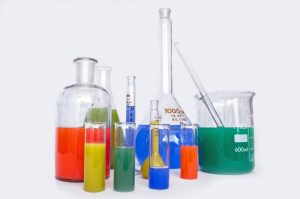
Vi ställer alla behållare på bordet. Låt oss fundera på vilken behållare som rymmer mest vatten? Mät hur mycket vatten barnen tycker får plats i den största behållaren.

Pröva och se om den här mängden vatten får plats i någon annan behållare. Mät hur mycket vatten barnen tycker får plats i den minsta behållaren. Hur många gånger får denna mängd vatten plats i den största behållaren för att fylla den?

Hur är det med andra behållare? Det övervägs om det finns några behållare som är olika i form men som kan hålla samma mängd vatten. Till exempel fylls två behållare som ska undersökas med vatten till brädden. Därefter tas ett mätglas, vattnet från en annan behållare hälls i den och mängden läses av. Töm mätbehållaren, häll vatten från den återstående behållaren i mätbehållaren och läs av mängden. Jämför dessa siffror.

Steg 3: Varför

Mängden vatten kan användas för att observera begreppet volym. Volym är allt utrymme som finns kvar inuti behållarens kanter. Volymen kan vara mycket liten, även om behållaren är stor. Å andra sidan kan volymen vara stor, även om behållaren är grund.

Volume Exploration

What do the concepts mean more, less and as much? What about bigger and smaller? Can it be investigated experimentally?

For example, you can drink water up a glass and consider whether two glasses of water is more or less than one glass of water. What happens if everyone drinks two glasses of water? Does one then drink more or less than the other? Or does everyone drink the same amount?

You can also compare two water glasses of different sizes. Which is the biggest and which is smaller?

Step 1 Materials

  • Water
  • Measuring cup
  • Containers of different sizes and shapes (narrow, high, low…)

Step 2 Operation

We put all the containers on the table. Let’s think about which container holds the most water? Measure how much water the children think can fit in the largest container.

Try and see if this amount of water can fit in any other container. Measure how much water the children think can fit in the smallest container. How many times does this amount of water fit in the largest container to fill it?

What about other containers? Consider if there are any containers that are different in shape but can hold the same amount of water. For example, fill two containers to be examined with water to the brim. Then a measuring glass is taken, the water from another container is poured into it and the amount is read. Empty the measuring container, pour water from the remaining container into the measuring container and read the amount. Compare these numbers.

Step 3: Why

The amount of water can be used to observe the concept of volume. Volume is all the space left inside the edges of the container. The volume can be very small, even if the container is large. On the other hand, the volume can be large, even if the container is shallow.


Flytande blommor och ytspänning

Vad har du sett flyta eller hoppa på vattenytan?

Steg 1 Material

  • Papper
  • Pennor
  • Sax
  • En stor platt behållare
  • Vatten
  • Ullgarn
  • Tvål
  • Två plastmuggar

Steg 2 Genomförande

Låt oss börja med att förbereda blommorna.

  • Rita en blomma på ett papper med en mittdel större än kronbladet.
  • Klipp ut blomman från pappret. Blomman kan dekoreras med kritor.
  • Vik blombladen inåt i ordning.
  • Fundera på: Flyter blomman i vattnet?
  • Lägg blommorna i vattnet
  • Fundera på: Varför öppnar blommorna sig i vattnet?

Steg 3: Varför

Blomman öppnas på grund av kapilläreffekt. Papperets struktur har små rör genom vilka vatten kan tränga in att färdas uppåt. Detta får blomman att öppna blombladen.

Steg 4 Genomförande

Vad händer med ullgarn om det läggs i en plastmugg med vatten?

  • Använd två plastmuggar, den ena med bara vatten i den andra med lite tvål i.
  • Vad händer? Varför?

Steg 5 Varför

Tvålen minskar vattnets ytspänning och gör att ullgarnet blir våtare och sjunker. till jordens botten.


Källa: Rehunen, Kirsi. Tiedeleikkejä pikkututkijoille.

Floating flowers and surface tension

What have you seen floating or jumping on the surface of the water?

Step 1 Materials

  • Paper
  • Pens
  • Scissors
  • A large flat container
  • Water
  • Wool yarn
  • Soap
  • Two plastic cups

Step 2 Implementation

Let’s start by preparing the flowers.

  • Draw a flower on a piece of paper with a middle part larger than the petals.
  • Cut out the flower from the paper. The flower can be decorated with crayons.
  • Fold the flower petals inwards in order.
  • Think about: Will the flower float in the water.
  • Place the flower into the water.
  • Think about: Why are the flowers opening up in the water?

Step 3: Why

The flower opening is a capillary effect. The structure of the paper has small tubes through which water can penetrate to travel upwards. This makes the flowers open the petals.

Step 4 Implementation

What happens to wool yarn if it is put in a plastic cup with water.

  • Use two different plastic cups, one with only water, the other with some added soap.
  • What is happening? Why?

Step 5: Why

The soap reduces the surface tension of the water and causes the wool yarn to become wetter and sink. to the bottom of the earth.


Source: Rehunen, Kirsi. Tiedeleikkejä pikkututkijoille.